
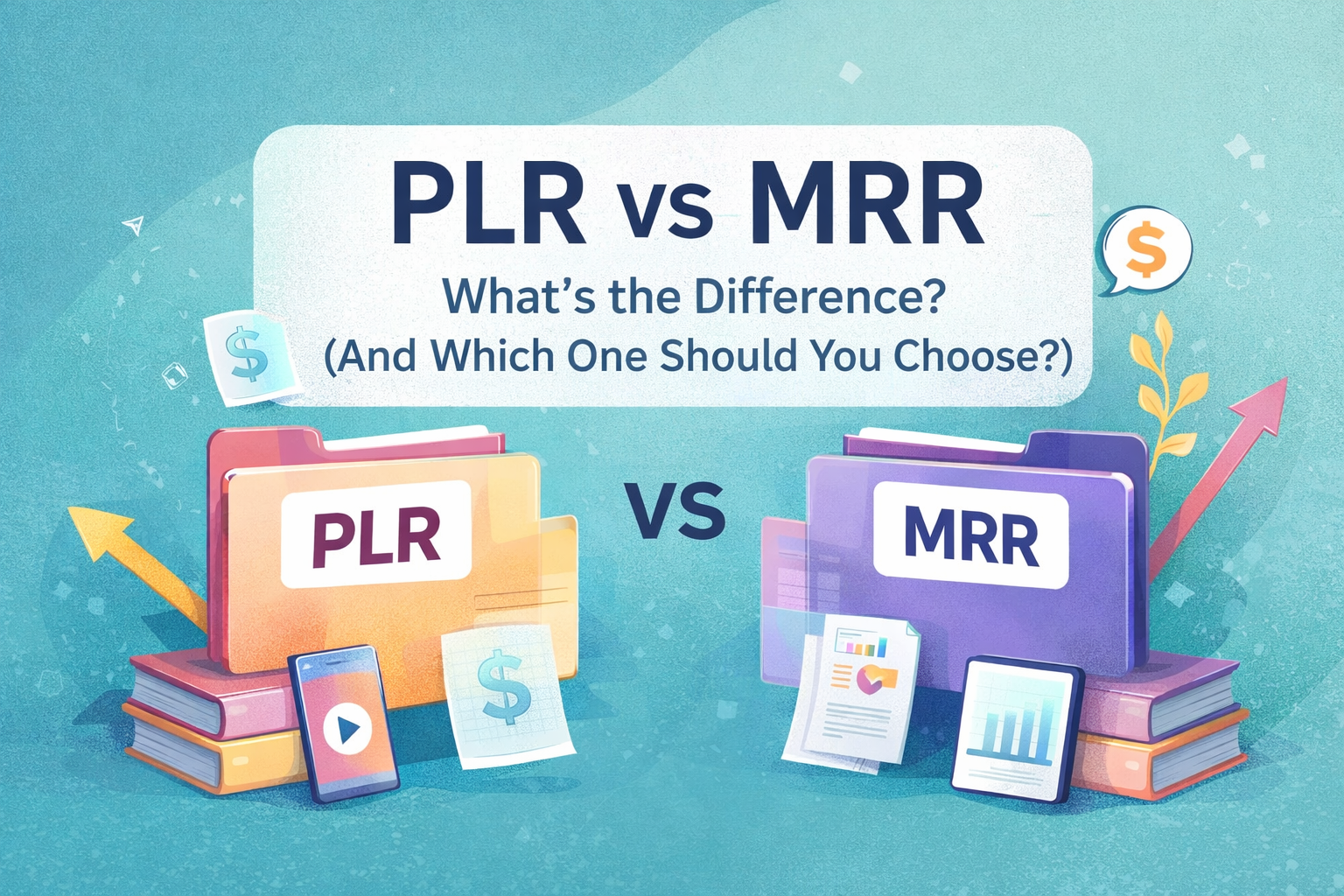
The Best Choice For Your Business
If you’ve started exploring digital products, you’ve probably come across terms like PLR and MRR.
Both are types of licensing that allow you to use and sell digital content — but they work in very different ways.
Understanding the difference between PLR and MRR can help you decide which type of digital product is right for your business.
In this guide, we’ll break down what each license means, how they work, and when you might want to use one over the other.
Plr
PLR stands for Private Label Rights. This type of license allows you to edit, customize, and brand content as your own.
With PLR, you can typically:
- modify the content
- add your own branding
- repurpose the material
- combine it with other content
- sell it as a product
“Instead of starting from a blank page, PLR gives you a ready-made foundation.”
For example, you might purchase a PLR ebook and:
- rewrite sections
- add your brand colors
- create worksheets
- turn it into a course
The flexibility of PLR is why many creators use it as a starting point for building digital products.
What Is MRR?
MRR stands for Master Resell Rights.
With MRR products, you are allowed to sell the product and keep 100% of the profits, but you usually cannot change the content itself.
This means you can:
- sell the product
- keep the revenue
- pass the resell rights to your customers
But you generally cannot edit or rebrand the product.
For example, if you purchase an MRR course, you can sell it in your shop exactly as it is.
However, you normally cannot modify the course content or claim authorship.
That is why in my shop I work hard to bring you products that have BOTH PLR + MRR licensing so you may edit AND resell with resell rights if you want to. You don’t have to, totally your choice but isn’t it nice to know that freedom is there and you’ll never have to worry about being pulled up on using content the wrong way.
Key Differences Between PLR and MRR
Although both licenses allow you to sell digital products, the main difference is customization.
PLR allows you to modify the content, while MRR typically does not.
Here’s a simple comparison:
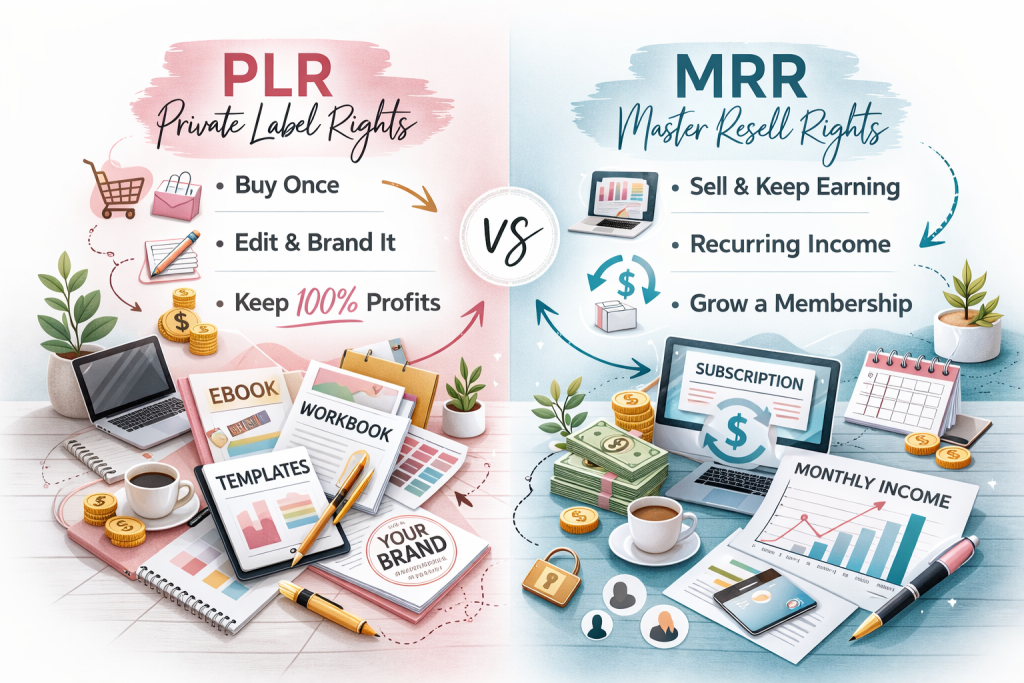
PLR
- editable
- customizable
- can be rebranded
- can be repurposed
MRR
- cannot usually be edited
- sold as-is
- you keep the profits
- customers may also receive resell rights
Because of this difference, PLR is often used for content creation, while MRR is commonly used for reselling digital products.
When Should You Use PLR?
PLR works best when you want to:
- create your own digital products
- build lead magnets
- produce content faster
- customize resources for your audience
Many entrepreneurs use PLR as a foundation, then add their own expertise to make the content unique.
Think of PLR as a framework
you begin with ready-made content, then customize it to reflect your voice, expertise, and audience.
When Should You Use MRR?
MRR can be useful when you want to:
- sell ready-made digital products
- quickly add products to your shop
- generate revenue without creating content
However, because MRR products cannot usually be modified, they may require strong marketing and positioning to stand out.
Can You Use Both?
es — many creators use both PLR and MRR in their businesses.
For example:
- PLR can be used to create custom digital products
- MRR products can be added to your shop as ready-to-sell resources
Using a combination of both gives you flexibility and multiple income opportunities.
A Smart Way to Start Using PLR
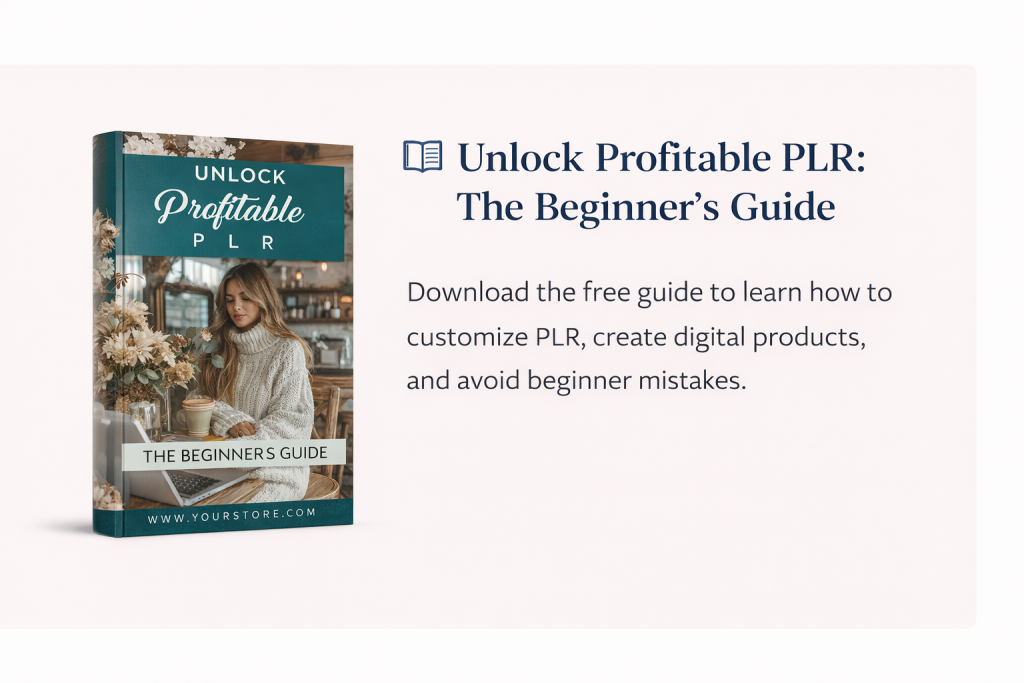
f you’re new to PLR and want to understand how to customize it properly, I created a free guide to help you get started.
Unlock Profitable PLR: The Beginner’s Guide
Inside the guide you’ll learn:
• what PLR is and how it works
• how to customize PLR content
• common mistakes to avoid
• ways to turn PLR into digital products
Download the free guide here.
Both PLR and MRR offer opportunities for creators and digital entrepreneurs.
PLR gives you the freedom to customize and create, while MRR allows you to sell ready-made products quickly.
By understanding how these licenses work, you can choose the approach that best supports your goals and your business model.



0 Comments